nguyen.eli@outlook.com ⨳ 571-284-8066
The Tempest
GMU School of Theater
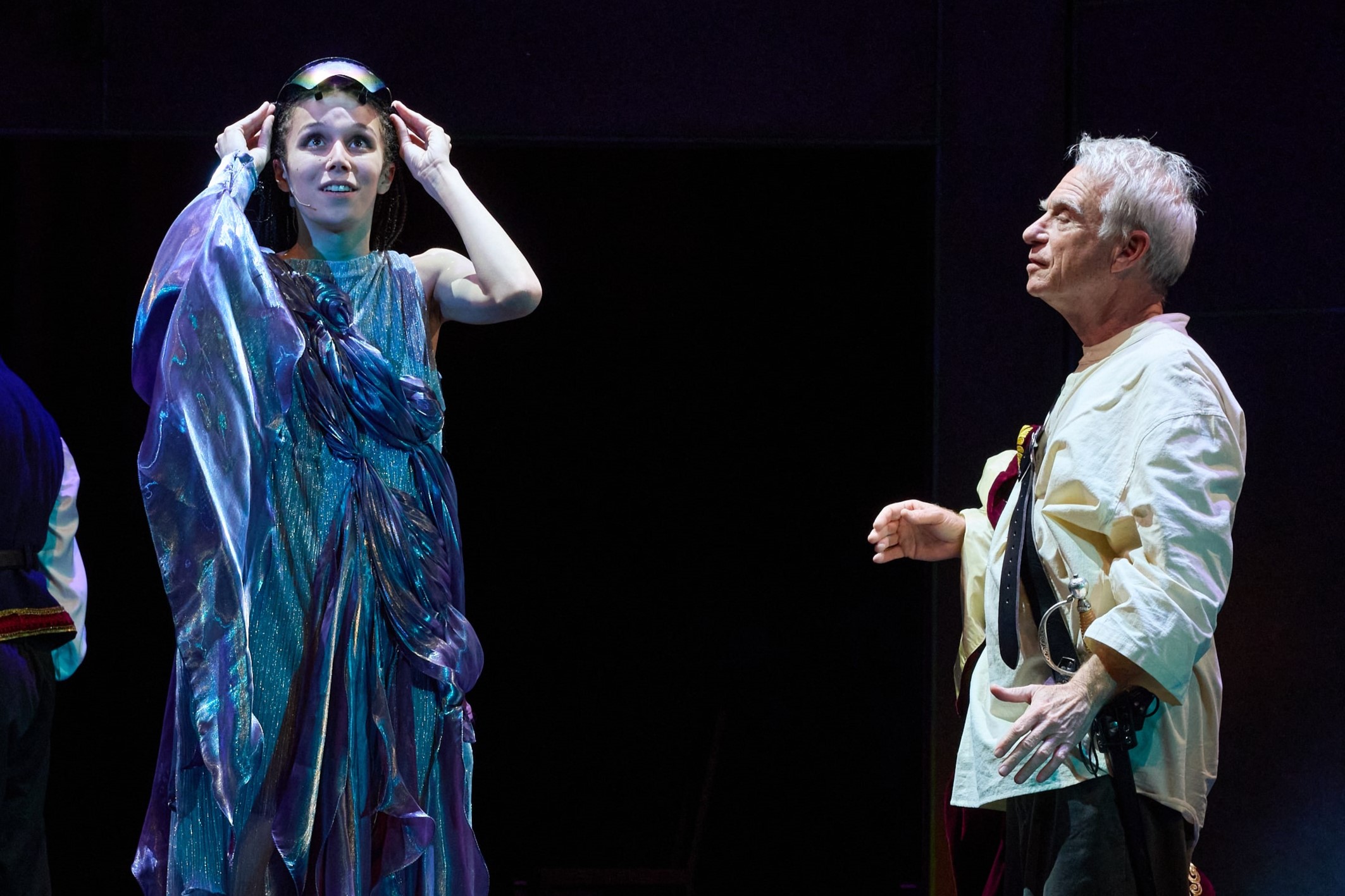
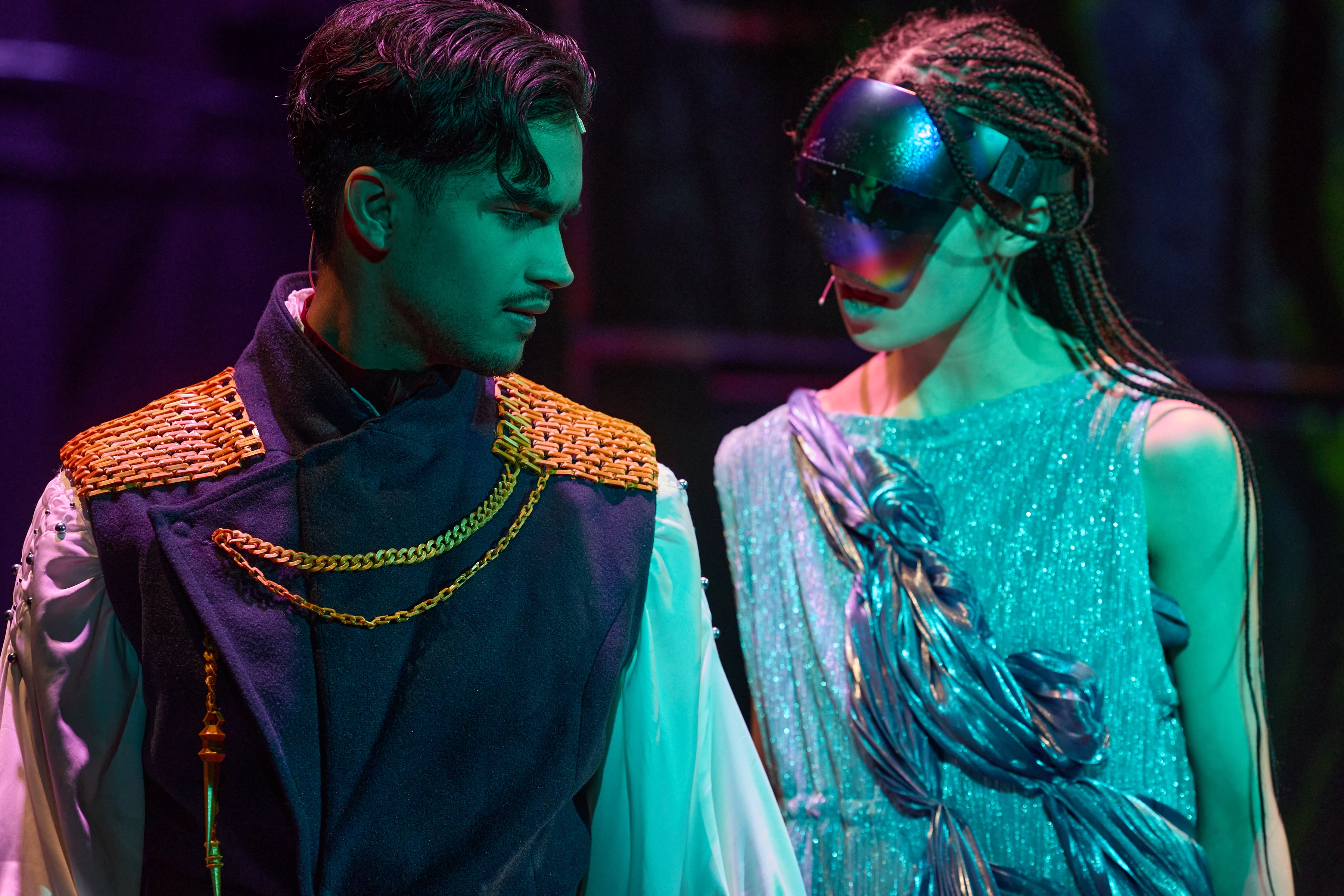
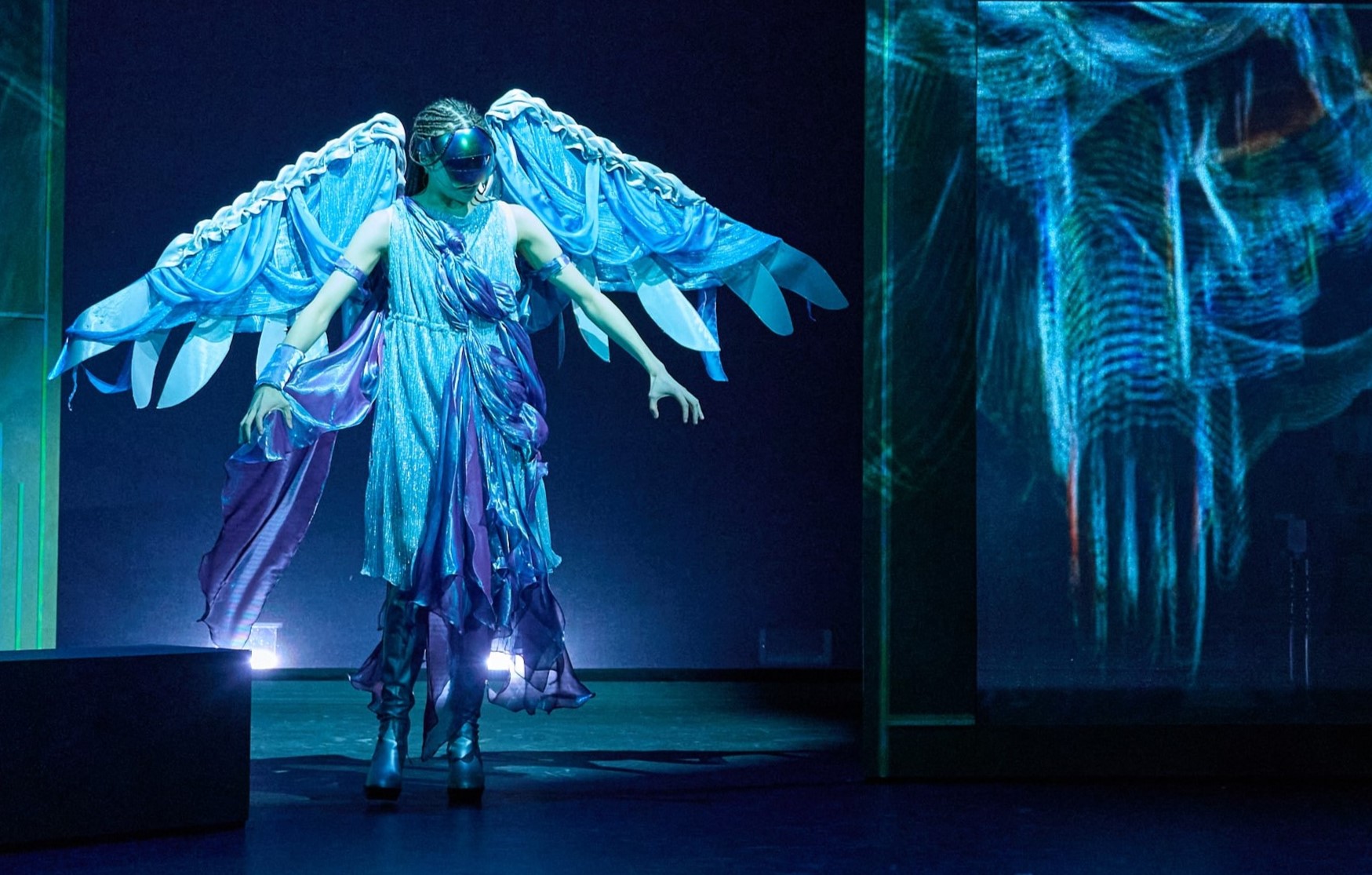
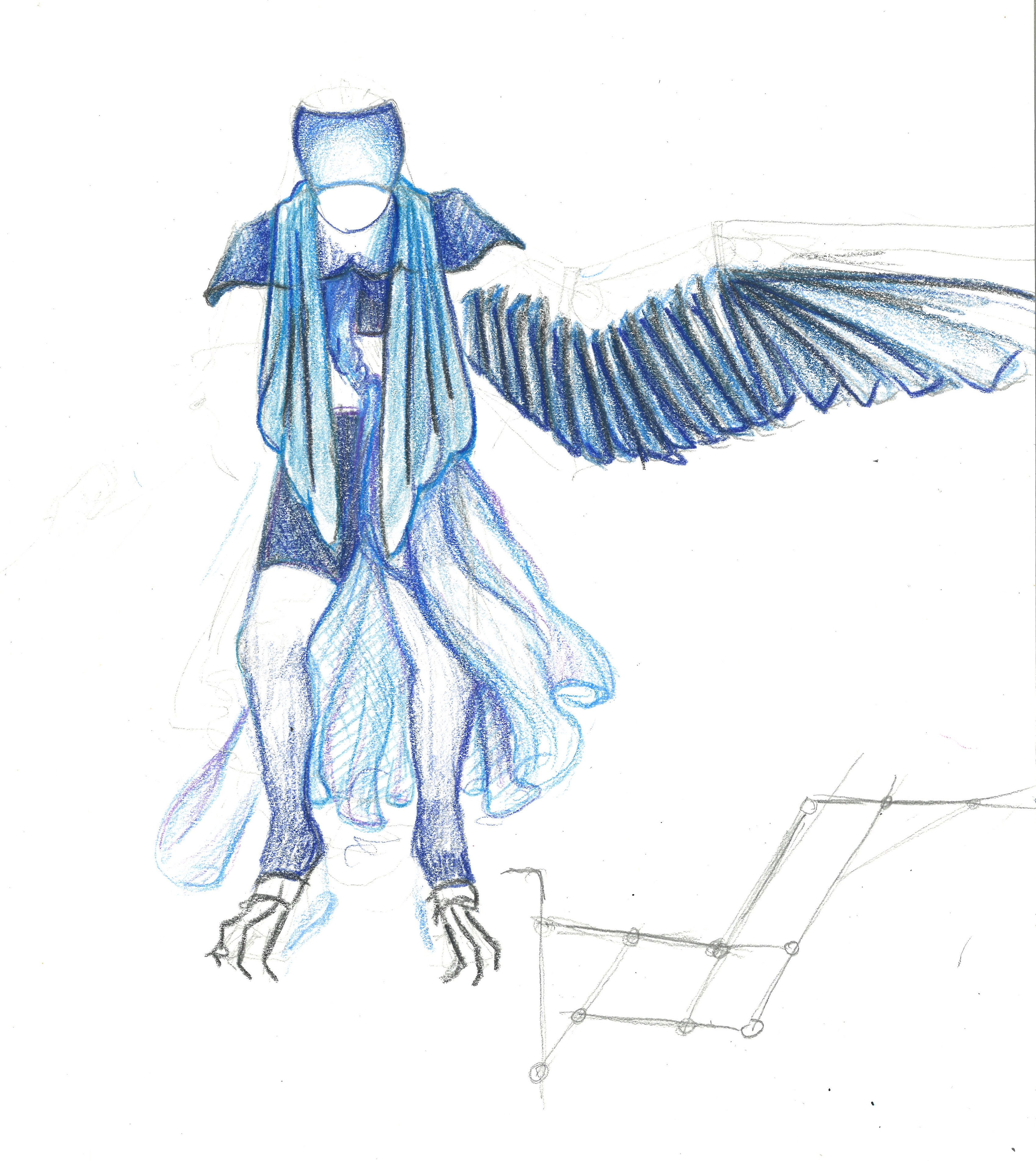
With the techno-fantasy inspiration for the setting of the show, I wanted to create a dichotomy between the 'high-tech' Ariel and 'low-tech' Caliban. For Ariel, the type of conjuring and magic that they perform during the show was reminiscent of the seemingly magical functions of digital AI assistants - faceless but with an uncanny sentience.
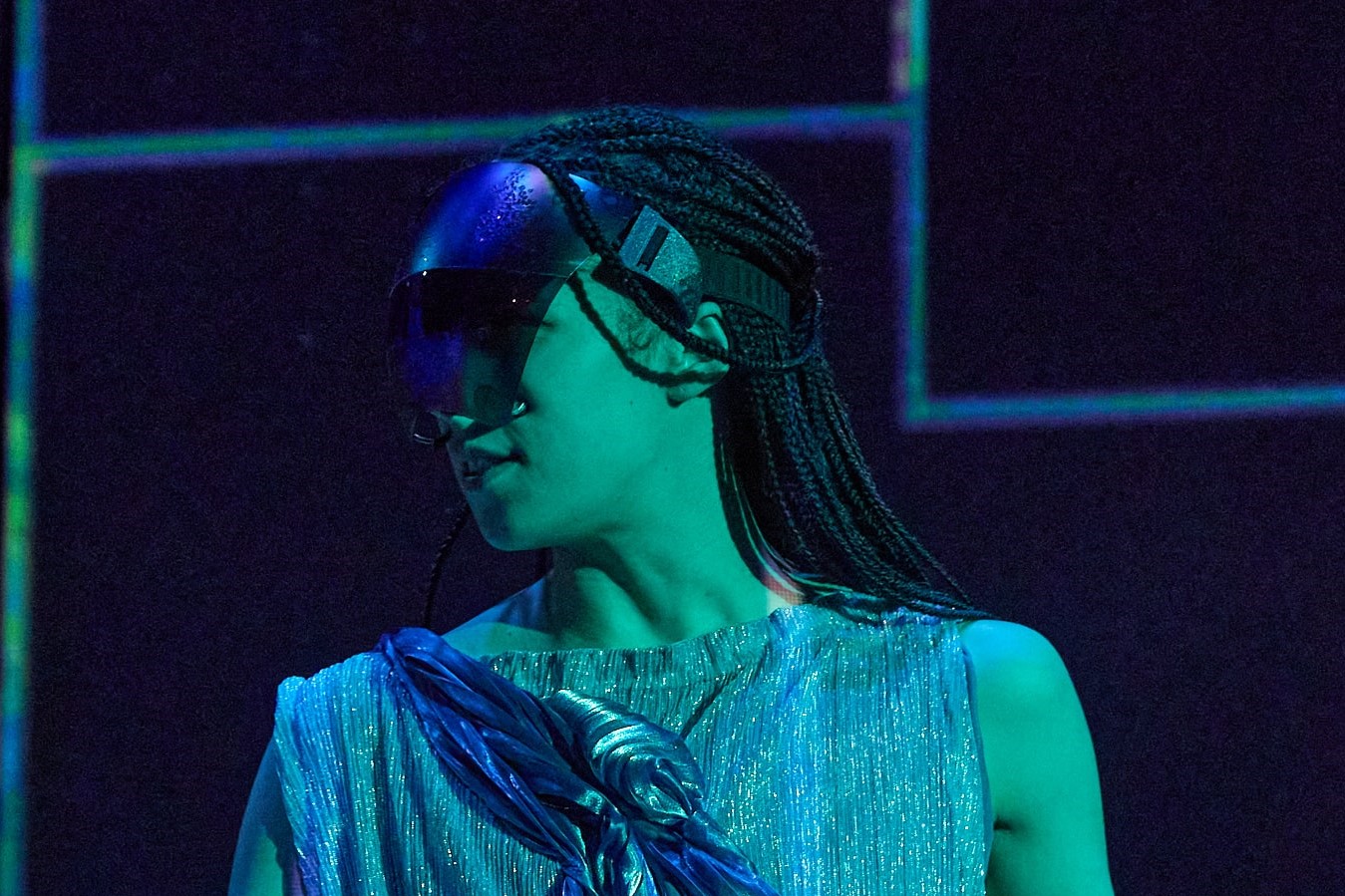
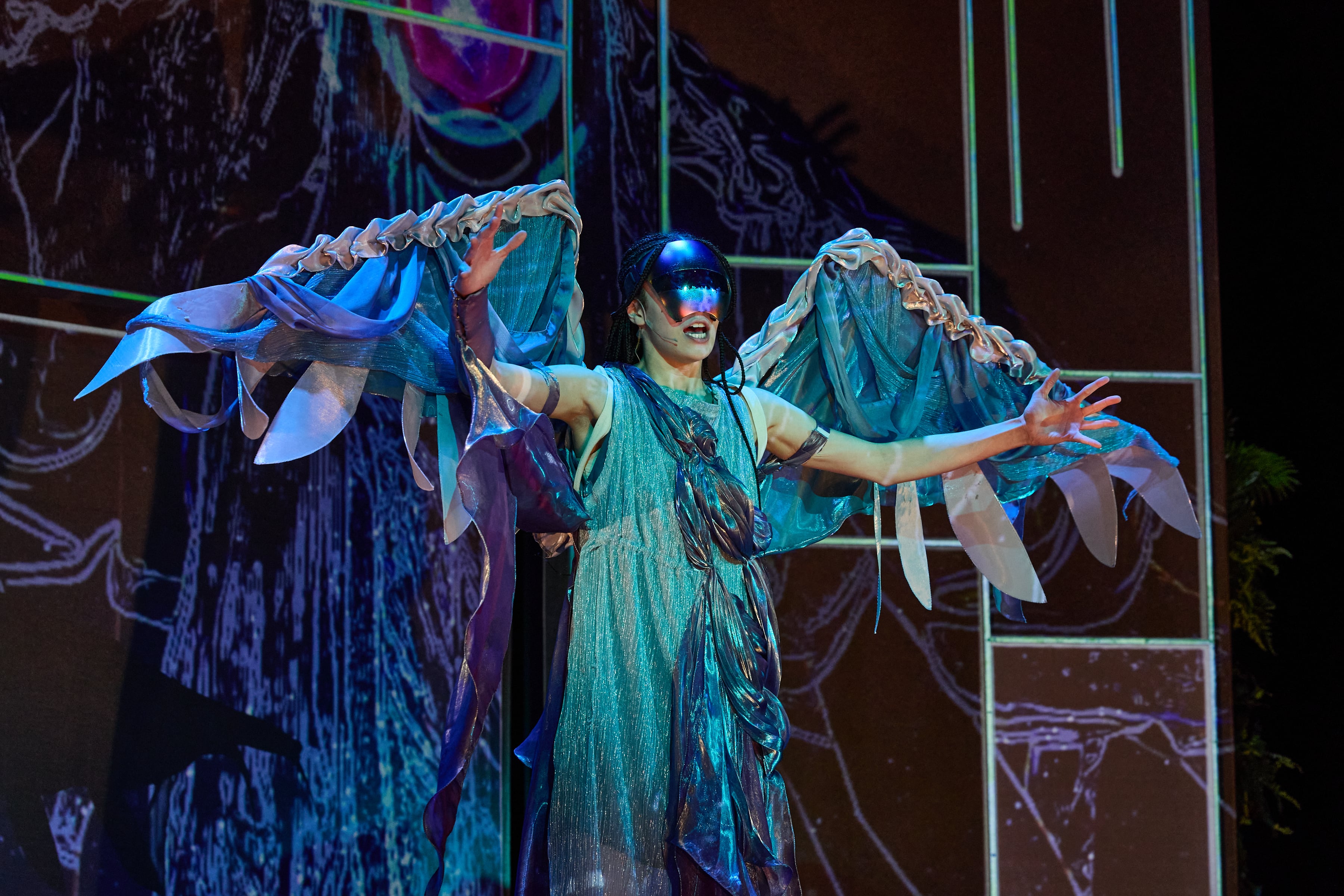
Ariel's visor was part of the design from the very beginning, though the technical execution was an ongoing process. I mattified the original polarized treatment, leaving a small untreated strip so that the actor's vision wasn't clouded. The visor went through several prototype stages to try and find a solution that didn't affect the actor's speech or the mic placement, and was still able to be removed easily at the end of the show. I wanted the visor to be a visual symbol of Prospero's control over Ariel, so that there would be additional emotional weight to the scene in Act 5 when Ariel is released. The audience only sees Ariel's human face when they are given their freedom by Prospero.
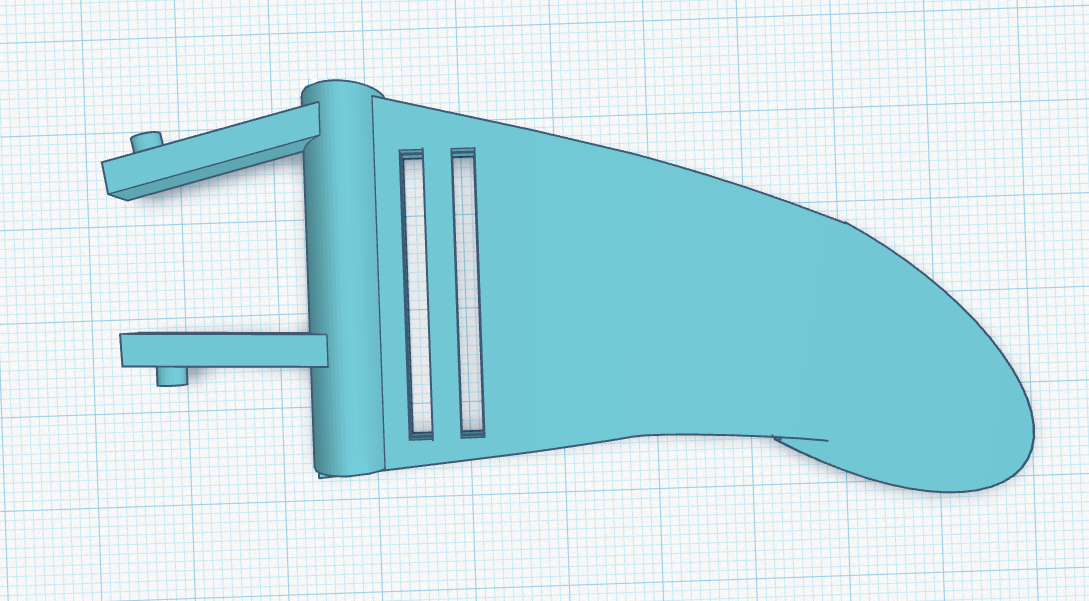
The visor needed to sit higher on the face than it was originally designed to. It was meant to be worn like sunglasses, and I went through many iterations of trying to adjust the fit by altering these arms. The version in the video sort of worked, but it wasn't stable, and shifted around as the actor was moving. The final version used a wide elastic strap fitted into short, stabilizer pieces that replaced the arms entirely.
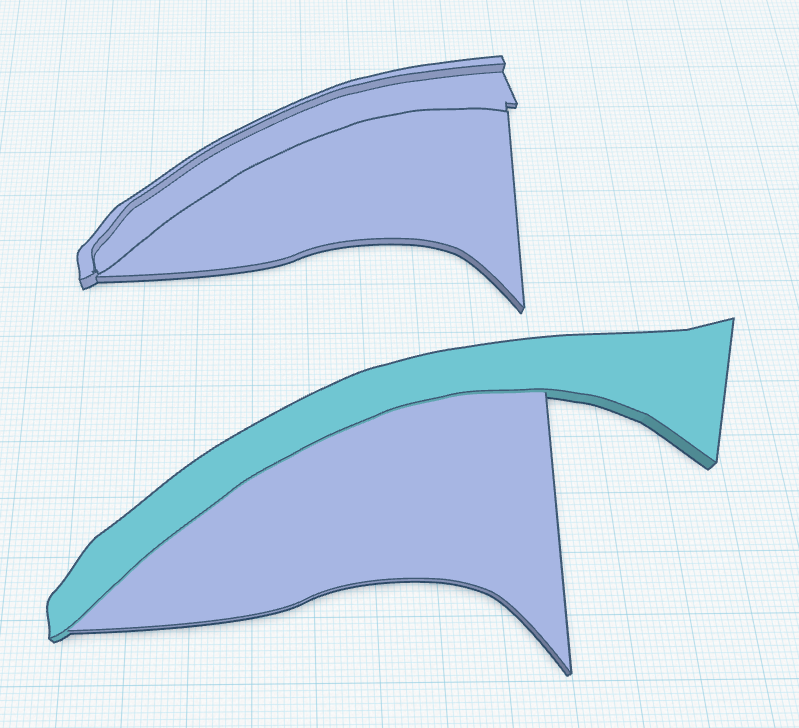
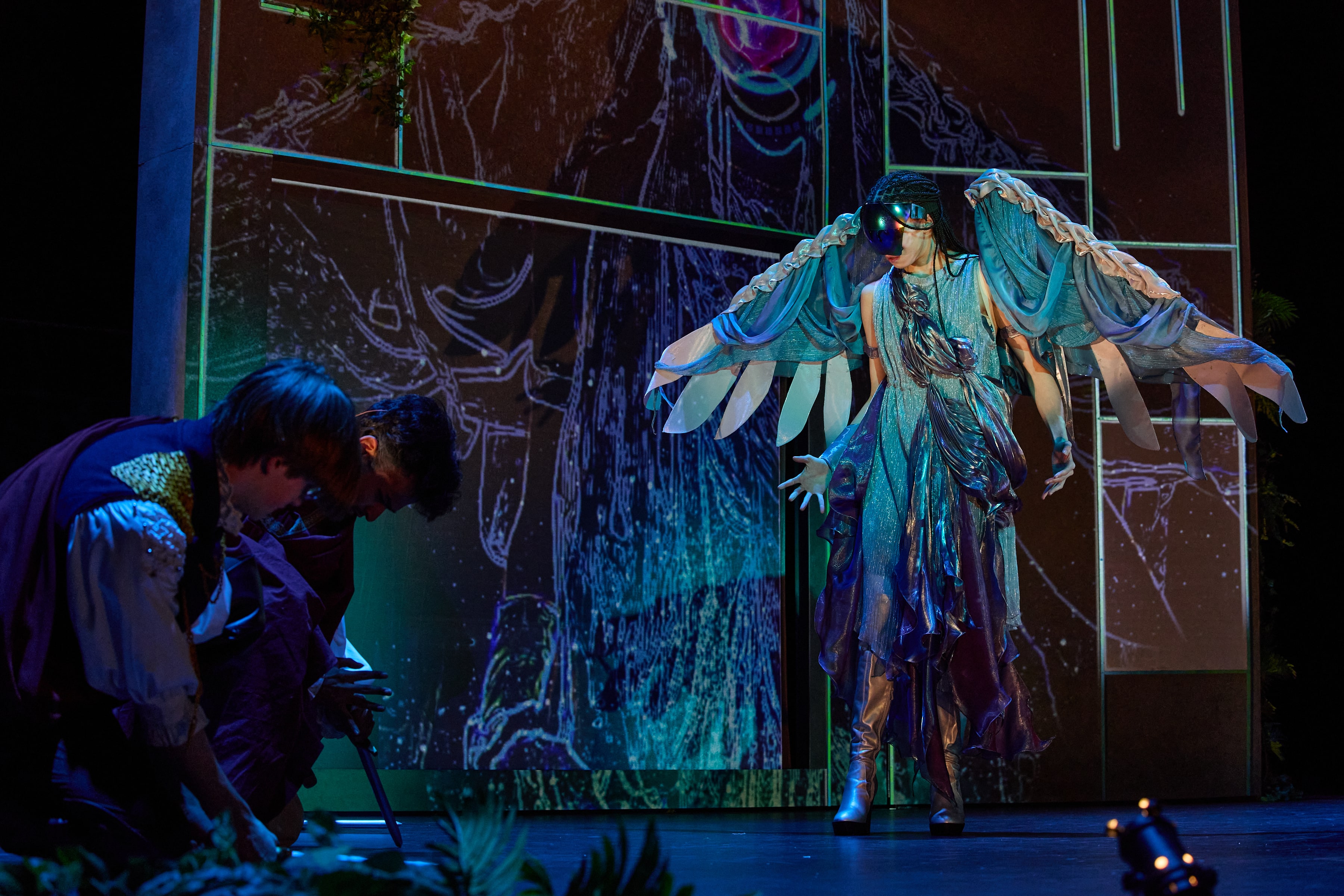
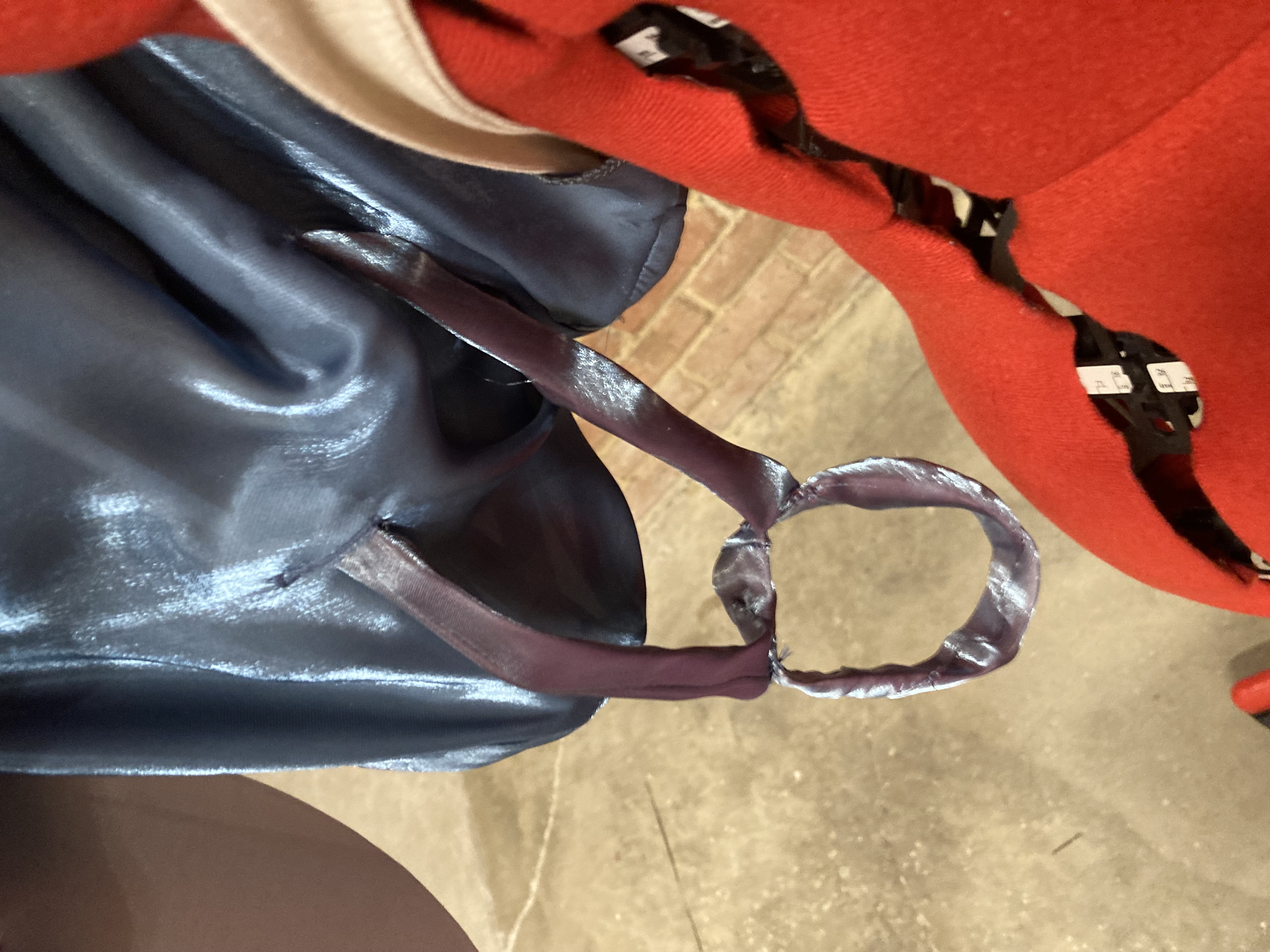
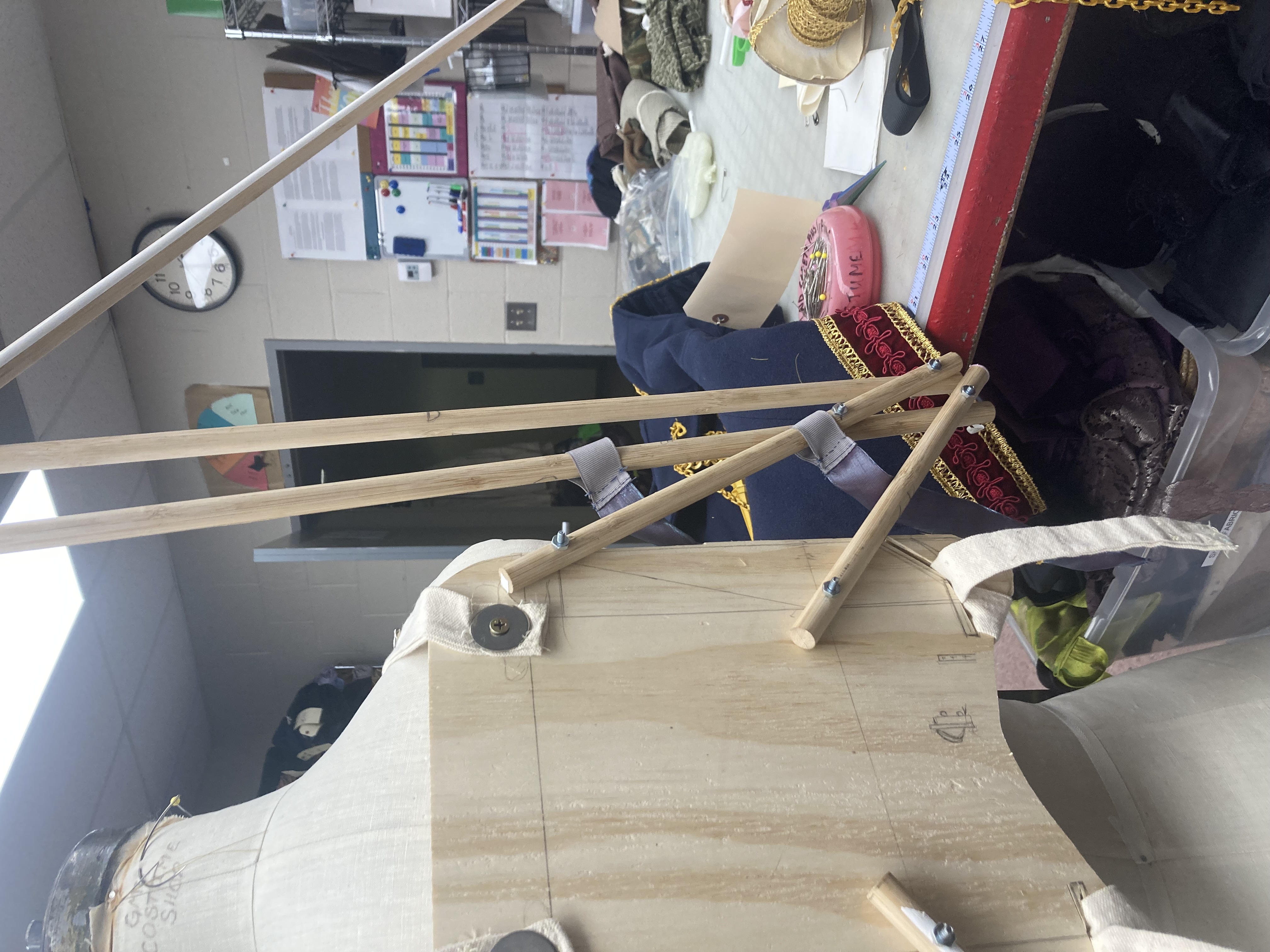
Ariel's wings for Act 3 Scene 3 were another design challenge. The goal was to make the wings look like they were manifested from the same 'stuff' that the incorporeal Ariel manifests as to the living characters. The final result was a wood armature covered in fabric that the actor put on like a back pack. Elastic arm loops slid onto the upper arms, so that when the actor raised their arms, the wings would also flare out, extending up to ~3ft.
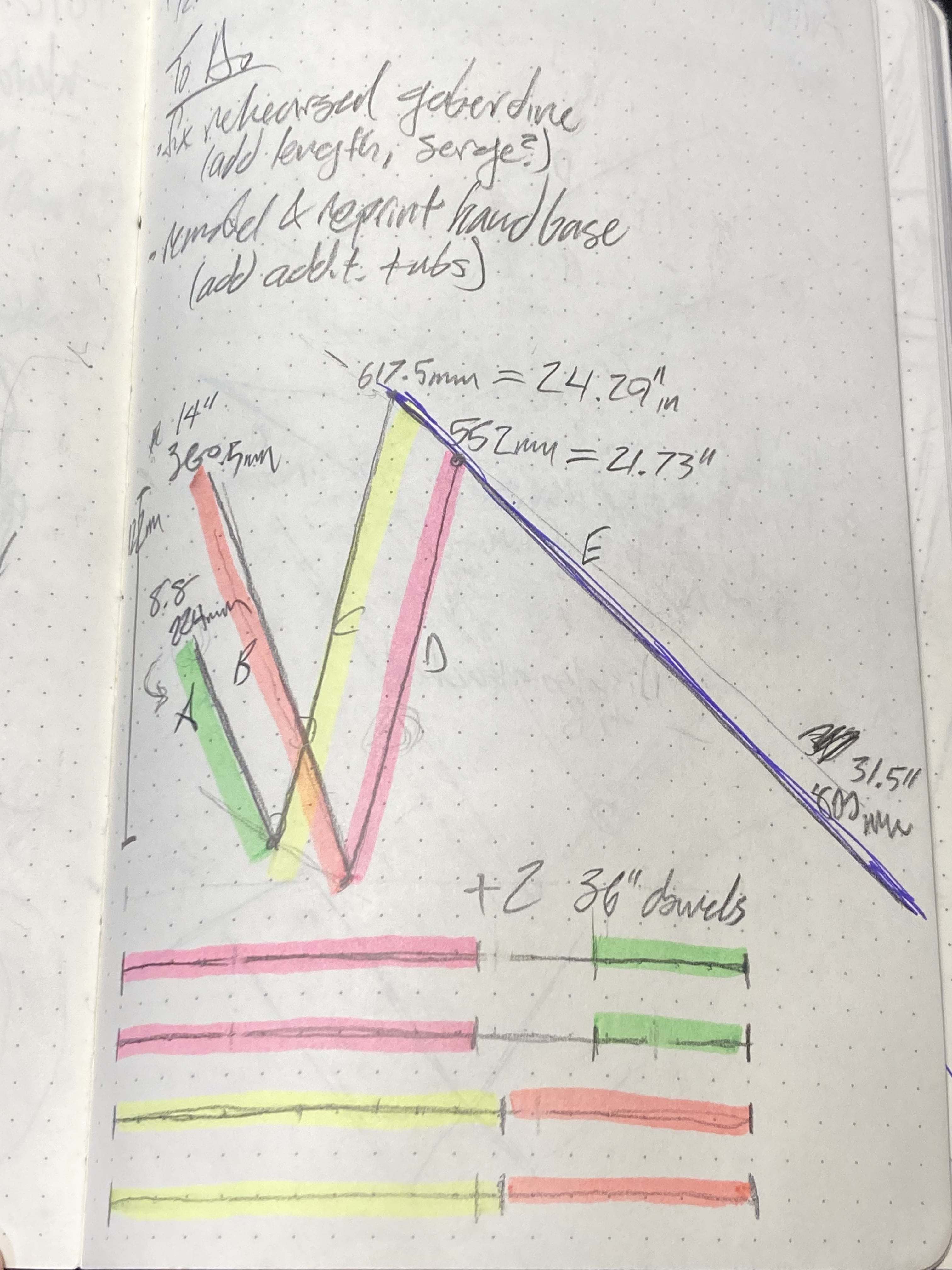
I made a paper model in 1/4th scale to check the proportions of each joint, then scaled them up to the final size. Making sure that the holes I drilled in each dowel were perfectly in-line was an unexpected challenge. I used painters tape to make sure that the holes would be in line with each other when I put them under the drill press.
Initially I used cotterpins to attach each dowel to each other (see video) but the ends were snagging the fabric. I switched to nuts and bolts that were then loctite'd into place. I stole the canvas straps off a tote bag, secured one end to the top, and then wound the other end around the grooves I cut at the bottom. The arm bands were sewn around the poles before they were covered in fabric.
GET IN TOUCH